
Luồng xử lý API Backend (API Processing Flow)
1.1. Mục tiêu chương.
Mô tả luồng xử lý chuẩn của một API backend từ khi nhận request đến khi deploy production nhằm:
Thống nhất cách xây dựng API giữa các team
Đảm bảo tuân thủ đầy đủ các quy định kiến trúc
Dễ trace lỗi và audit
Liên kết các chuẩn đã quy định ở các chương trước
1.2. Phạm vi áp dụng:
Áp dụng cho:
Tất cả REST API trong modules/**
Core Team và Partner Team
Tất cả service Spring Boot
1.3. Tổng quan luồng xử lý API
Luồng chuẩn:
Client Request ↓Security / Auth ↓Controller ↓DTO Validate ↓Service Logic ↓Repository / DB ↓Response Mapping ↓Logging & Audit ↓Return Response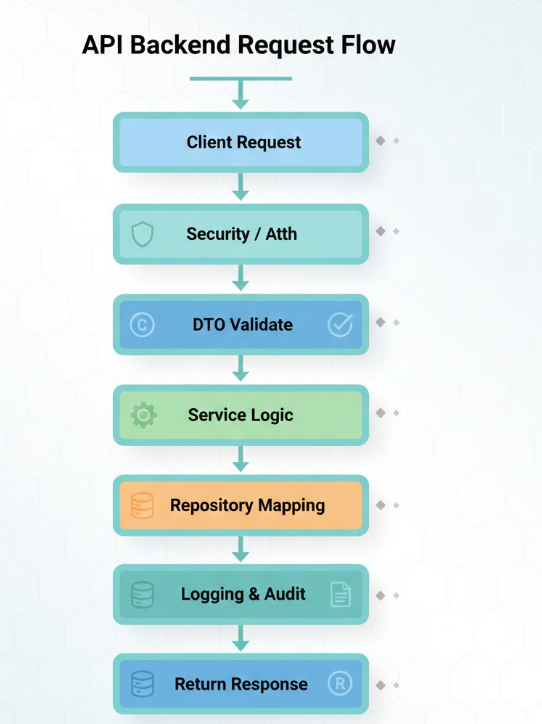
1.4. Các bước xử lý chi tiết
Bước 1. Client gọi API
Ví dụ:
POST /api/v1/users
Payload:
{
"username": "test",
"password": "123456"
}
Quy định liên quan:
👉 Chương 7 — API Design & Response Standard
Bước 2. Security / Authentication
Hệ thống kiểm tra:
JWT / SSO token
Permission
Role
Nếu fail:
👉 Chương 8 — Cơ chế xác thực & SSO (WSO2)
Bước 3. Controller nhận request
@PostMapping
public ApiResponse<UserResponse> create(
@Valid @RequestBody UserCreateRequest request) {
return ApiResponse.ok(userService.create(request));
}
Quy định:
Name Controller
Không chứa business logic
👉 Chương 3 — Coding Convention
👉 Chương 7 — API Design
Bước 4. DTO Validation
DTO:
public class UserCreateRequest {
@NotBlank
@Size(max = 100)
private String username;
@NotBlank
private String password;
}
Spring tự validate trước khi vào service.
Nếu lỗi:
400 Bad Request
Response chuẩn:
{
"code": "VALIDATION_ERROR",
"message": "username is required"
}
Quy định:
👉 Chương 3 — Coding Convention (Validation)
👉 Chương 7 — Response Standard
Bước 5. Service xử lý logic
public UserResponse create(UserCreateRequest req) {
log.info("Create user {}", req.getUsername());
UserEntity e = mapper.toEntity(req);
repo.save(e);
return mapper.toResponse(e);
}
Cấu trúc chuẩn 1 hàm service:
validate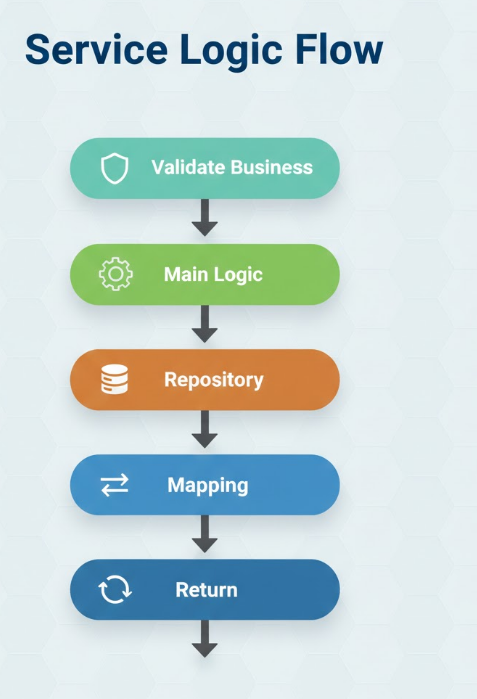
Quy định:
👉 Chương 3 — Coding Convention
👉 Chương 4 — Entity & Database
Bước 6. Repiository & Database
userRepository.save(entity);
Nếu thay đổi schema:
update entity
migration script
Quy định:
👉 Chương 4 — Thay đổi Entity & DB
👉 Chương 5 — Schema & Migration
Bước 7. Mapping Response
return UserResponse.builder()
.id(e.getId())
.username(e.getUsername())
.build();
Response chuẩn:
{
"code": "SUCCESS",
"data": {
"id": 1,
"username": "test"
}
}
Quy định:
👉 Chương 7 — Response Standard
Bước 8. Logging & Audit
Trong service:
log.info("User created id={}", e.getId());
Nếu nghiệp vụ quan trọng:
ghi audit_log
Quy định:
👉 Chương 3 — Logging
👉 Chương 6 — Audit Log
Bước 9. Exception Handling
Ví dụ:
if (exists) {
throw new BusinessException("USER_EXISTS");
}
Global handler:
@ExceptionHandler(BusinessException.class)
Response:
{
"code": "USER_EXISTS",
"message": "User already exists"
}
Quy định:
👉 Chương 7 — Response & Error
1.5. Luồng phát triển & release API
Sau khi code xong:
Dev → Commit → PR → Review → Merge → CI Build → Deploy
Bước 10. Commit & PR
Quy định:
👉 Chương 9 — Git Workflow & Pull Request
Bước 11. Checklist trước merge
Quy định:
👉 Chương 10 — Checklist merge
Bước 12. Deploy & Update DB
Nếu có migration:
chạy script
deploy service
Quy định:
👉 Chương 5 — Migration
👉 Chương 12 — Connect DB
1.6. Sơ đồ tổng thể API lifecycle
https://docs.lifetex.vn/link/333#bkmrk-request-%E2%86%93-auth-%28ch8%29
Request
↓
Auth (Ch8)
↓
Controller (Ch3,7)
↓
DTO Validate (Ch3)
↓
Service Logic (Ch3)
↓
Entity/DB (Ch4,5)
↓
Mapping (Ch7)
↓
Logging/Audit (Ch3,6)
↓
Response (Ch7)
↓
Git/PR (Ch9,10)
↓
Deploy (Ch5,12)
1.7. Transaction trong xử lý API
1.7.1. Nguyên tắc transaction
Mọi thao tác thay đổi dữ liệu nghiệp vụ trong API phải được thực hiện trong transaction nhằm đảm bảo:
-
Tính toàn vẹn dữ liệu
-
Tính nhất quán hệ thống
-
Khả năng rollback khi lỗi
-
Đồng bộ dữ liệu và audit log
Transaction phải được đặt tại Service layer.
1.7.2. Quy định transaction
Transaction:
-
đặt tại Service
-
bao phủ toàn bộ nghiệp vụ
-
bao gồm repository và audit
-
rollback khi exception
Không được đặt transaction tại:
-
Controller
-
Repository
-
Mapper
1.7.3. Ví dụ transaction chuẩn
1.7.4. Quy tắc rollback
Transaction phải rollback khi:
-
BusinessException
-
RuntimeException
-
Database error
-
Validation fail trong service
Không được:
-
ghi audit trước khi save dữ liệu
-
commit từng phần nghiệp vụ
-
xử lý lỗi nhưng vẫn commit
1.8. Security Context trong Service
1.8.1. Khái niệm
Security Context là thông tin người dùng hiện tại sau khi xác thực (JWT / SSO).
Thông tin thường có:
-
userId
-
username
-
role
-
permission
-
tenant
-
organization
1.8.2. Sử dụng trong Service
Service được phép truy cập Security Context để:
-
xác định user thao tác
-
kiểm tra permission
-
ghi audit
-
filter dữ liệu theo user
Ví dụ:
1.8.3. Quy định sử dụng
Không được:
-
tin userId từ request
-
truyền userId từ Controller nếu đã có context
-
bypass permission check
Permission check phải tại Service layer.
1.8.4. Ví dụ kiểm tra quyền
1.9. Xử lý API danh sách (List API)
1.9.1. Nguyên tắc List API
API trả danh sách phải hỗ trợ:
-
pagination
-
sorting
-
filter
Mục tiêu:
-
tránh trả dữ liệu lớn
-
đảm bảo hiệu năng DB
-
hỗ trợ UI paging
1.9.2. Chuẩn request List API
Ví dụ:
Tham số chuẩn:
-
page (bắt đầu từ 0)
-
size
-
sort
-
filter
1.9.3. Chuẩn response List API
1.9.4. Quy định bắt buộc
-
Không trả toàn bộ bảng
-
Pagination bắt buộc với list lớn
-
Repository phải dùng paging query
-
Không load toàn bộ relation
1.10. Gọi hệ thống ngoài trong API
1.10.1. Phạm vi
API có thể cần gọi:
-
SSO
-
External API
-
Message Queue
-
Cache
-
File Storage
1.10.2. Kiến trúc gọi ngoài
Luồng chuẩn:
Service → Integration Client → External System
Ví dụ:
1.10.3. Quy định
Không được gọi external tại:
-
Controller
-
Repository
Phải:
-
gọi trong Service
-
handle lỗi external
-
timeout / retry nếu cần
1.10.4. Xử lý lỗi external
Nếu external fail:
-
map thành BusinessException hoặc SystemException
-
không expose lỗi raw
-
ghi log lỗi
1.11. Monitoring & Metrics trong API
1.11.1. Mục tiêu
Ngoài Logging & Audit, API production cần hỗ trợ:
-
theo dõi hiệu năng
-
theo dõi lỗi
-
theo dõi tải hệ thống
1.11.2. Metrics cần có
-
request count
-
error rate
-
response time
-
DB query time
-
external call time
1.11.3. Trace request
Mỗi request phải có:
-
traceId
-
duration
-
status
TraceId phải liên kết:
-
log
-
audit
-
exception
1.12. Versioning API
1.12.1. Chuẩn version
API phải có version trong URL:
1.12.2. Nguyên tắc version
-
Không thay đổi breaking trong cùng version
-
API cũ phải giữ backward compatibility
-
API mới → tăng version
-
Không reuse version
1.12.3. Ví dụ
1.13. Testing trước merge
1.13.1. Mục tiêu
Đảm bảo API hoạt động đúng trước khi merge và deploy.
1.13.2. Loại test bắt buộc
-
Unit test Service
-
Validation test
-
Error case
-
Integration test API
1.13.3. Quy định
API mới hoặc thay đổi logic phải có test:
-
thành công
-
validation fail
-
business fail
-
permission fail
1.14. Hiệu năng & Database
1.14.1. Nguyên tắc thiết kế DB trong API
API phải đảm bảo:
-
query tối ưu
-
index phù hợp
-
không N+1 query
-
pagination cho list
1.14.2. Các lỗi cần tránh
-
load toàn bộ relation
-
query trong loop
-
select * bảng lớn
-
thiếu index filter
1.14.3. Kiểm tra khi review
Khi review API cần kiểm tra:
-
query có index không
-
list có paging không
-
join có cần thiết không
-
có N+1 không